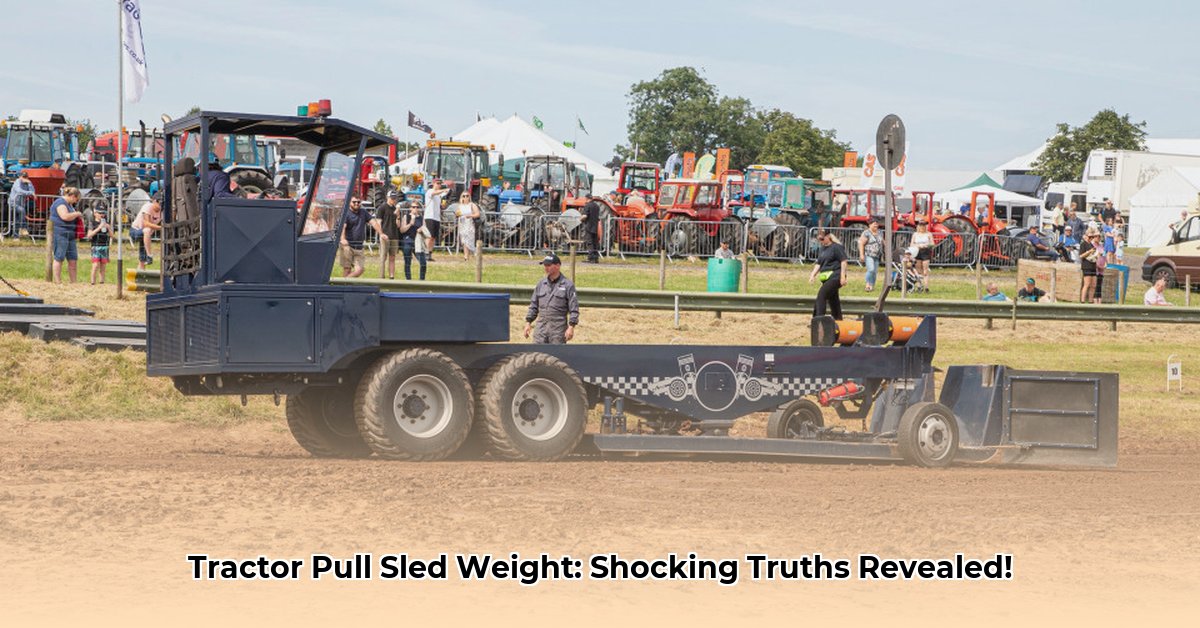
How Much Does a Tractor Pull Sled Weigh?
The weight of a tractor pull sled isn't a single number; it varies significantly depending on the competition class. Think of it like asking how much a car weighs – it depends on the make and model. Similarly, tractor pull sleds are designed for different classes of tractors, each with varying horsepower and capabilities. This ensures a fair and exciting competition. For more information on tractor pulls, check out this useful resource.
The Weight Classes: Ensuring Fair Play
Weight classes are crucial for fair competition. Organizations like the NTPA (National Tractor Pulling Association) establish different weight categories to match tractors with appropriately weighted sleds. Smaller, less powerful tractors compete against lighter sleds, while the heavy hitters tackle the larger, heavier ones. This prevents mismatches where a less powerful tractor has no chance against an excessively heavy sled. So, the answer to "how much does a tractor pull sled weigh?" is highly dependent on the specific competition class. This system of tiered classes is the backbone of fair competition in tractor pulling.
More Than Just Weight: The Science of Weight Transfer
The weight of the sled isn't static; sophisticated mechanisms shift weight during the pull. Imagine pushing a heavy shopping cart uphill – it's easy at first, then becomes exponentially harder. A similar principle applies to tractor pull sleds. Their weight transfer systems progressively increase resistance, making the pull more challenging as the tractor advances. This dynamic weight adjustment is key to the sport's excitement and challenge.
What Makes a Sled's Weight So Important?
Several factors contribute to a sled's "effective" weight (how difficult it feels to pull):
- Starting Weight: This is the sled's initial weight before weight transfer mechanisms engage. It varies considerably depending on the tractor's class.
- Weight Transfer System: This system dynamically increases resistance throughout the pull. The very mechanism contributes to the overall weight, amplifying the challenge.
- Trip Mechanism: This mechanism, activated at a specific point, abruptly increases resistance, making the final stage extremely difficult and testing the tractor to its limits.
Estimated Sled Weights by Class
While precise weights vary by event and organization, here's a general overview of weight ranges for different classes:
| Tractor Class | Estimated Sled Weight (pounds) |
|---|---|
| Super Stock | 28,000 - 35,000 |
| Super Farm | 30,000 - 40,000 |
| Modified | 40,000 - 50,000 |
| Super Modified | 50,000 - 60,000 |
| Pro Stock | 30,000 - 40,000 |
| Limited Pro Stock | 35,000 - 45,000 |
Important Note: These are estimates; always refer to the specific event's rules for precise weights. The weight can differ based on the organization and specific event guidelines.
Beyond the Scale: Other Factors Affecting the Pull
While the sled's weight is paramount, other factors also significantly influence the pull:
- Track Conditions: A smooth track is much easier to pull on than a rough or muddy one.
- Tractor Condition: The tractor's horsepower and tire condition significantly impact its pulling ability.
The sled's weight is only one piece of a complex equation.
Finding Exact Weights: Your Best Resources
For definitive weights, always consult the official rules and regulations of the specific tractor pull event. Event websites or rule books will provide the most accurate and up-to-date information.
Key Takeaways
- Tractor pull sled weights vary greatly depending on the competition class.
- Effective weight transfer mechanisms are crucial for creating a challenging and fair pull.
- Driver skill and tractor setup are equally important for success.
- Understanding weight transfer mechanics enhances performance optimization.
- Consistent track conditions are essential for fair competition.
Decoding the Weight Game: Sled Classes and Weights
The weight class dictates the sled's weight, influencing the difficulty of the pull. Heavier sleds create a more demanding challenge. However, it's not just about the total weight; the weight distribution is crucial for a fair and balanced pull.
The Mechanics of Weight Transfer: How It Works
Weight transfer systems typically utilize a shifting weight box. As the tractor pulls, weight shifts towards the rear, increasing the sled's ground penetration and friction, and making the pull progressively more difficult.
Optimizing the System: Strategies for Improvement
Improving weight transfer mechanisms involves:
- Smooth Weight Transfer: A smooth, consistent shift enhances predictability.
- Predictable Resistance: A well-designed system provides a consistent increase in resistance.
- Durable Construction: Robust systems are crucial to withstand immense forces.
Beyond the Mechanics: Tractor Setup and Driver Skill
Optimal tractor setup (tire pressure, weight distribution, drawbar height) and driver skill are as important as the sled's design. A skilled driver can often compensate for minor mechanical shortcomings.
The Importance of Track Conditions
Consistent track preparation is crucial for fair competition. Uneven ground impacts resistance, influencing the outcome of the pull.